


Most people, if they have an impression of embalming, it comes from a movie scene, a secondhand story from a relative, or a forum post written by someone who has never held a license. The misunderstandings can cause real harm.
Families making decisions based on incorrect information can spend more money than they need to, or lose peace of mind. And prospective students interested in a degree in mortuary science (opens in a new window) might start classes with ideas they have to spend time unlearning.
What Is the Embalming Process?
Embalming is a temporary preservation and preparation process performed by a licensed professional. It serves three purposes:
- Disinfection reduces the microbial load in tissue
- Short-term preservation slows natural decomposition to allow for viewing, transport, and a service
- Presentation restores a natural appearance so a family can see their loved one looking like themselves
Myth 1: Embalming Is Always Required by Law
In most cases, embalming is not required. In fact, the Federal Trade Commission’s Funeral Rule (opens in a new window) requires funeral providers to state in writing, on the general price list, that embalming is not required by law except in certain special cases.
State requirements are both narrow and varied. They may require embalming in situations that involve an extended interval between death and disposition, transport by common carrier, or when specific communicable diseases are present. Where state law calls for either embalming or refrigeration after a set period, a funeral home with refrigeration available must offer the family that choice.
Many funeral homes have their own policy regarding embalming before a public viewing, which is likely a business rule not governed by any statute. Families are entitled to ask which of the two applies, and funeral homes are restricted from embalming and billing for it without express permission.
Myth 2: Embalming Preserves the Body Forever
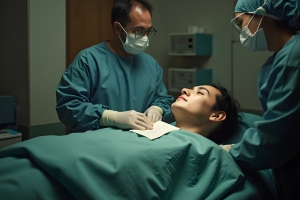
Embalming does not stop decomposition permanently. Arterial embalming fluid disinfects tissue and delays natural breakdown long enough for relatives to travel, hold a service, and say goodbye. The length of that window depends on the person’s condition at death, the cause of death, the interval before treatment, the fluid strength and volume used, and where the remains are kept.
Myth 3: Embalming Is Undignified or Impersonal
The preparation room is a clinical environment governed by professional and ethical standards, and the deceased stays draped and treated with respect throughout. Work begins with a case analysis in which the embalmer assesses the person’s condition, medical history, and anything affecting fluid distribution.
Work then moves to washing, disinfection, and the setting of features. Arterial injection introduces embalming solution through a selected vessel while drainage occurs simultaneously. Cavity treatment addresses the thoracic and abdominal organs, which arterial fluid does not reach adequately.
Dressing, cosmetics, and restorative art provide the final touches. The entire procedure is handled with care.
Myth 4: Embalming Makes People Look Artificial
The aim of embalming and restorative art is a natural, recognizable appearance. Proper fluid distribution works to restore tissue tone and return a natural color, reducing how much surface work is needed. Practitioners work from photographs the family provides and ask how the person wore their hair, whether they used makeup, and how they dressed.
For many families, a natural final look is an important part of the grieving process.
Myth 5: Anyone Can Embalm
Embalming is a regulated practice. In New York, for example, a candidate must complete at least 60 semester credits (opens in a new window) of collegiate funeral service study at an approved program, pass the National Board Examination administered by the International Conference of Funeral Service Examining Boards, serve a 12-month registered residency under a licensed funeral director, and pass a state law examination.
The coursework behind a mortuary science degree covers anatomy, microbiology, chemistry, pathology, restorative art, ethics, and funeral law. Embalmers also work under federal rules for regulated chemicals such as formaldehyde (opens in a new window).
Why the Facts Matter for Families and for Students
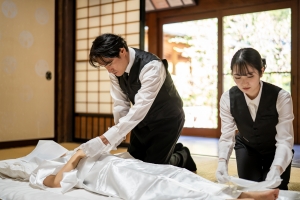
Families need accurate information to make decisions that are important for themselves as well as for the deceased. A family who believes embalming is legally mandatory may pay for a service they never needed or that their loved one didn’t want. A family who believes it is degrading may decline a viewing that would have helped their grieving process.
As well as the physical process, students should expect to learn the confidence and professionalism it takes to be the person standing in front of a grieving family when these questions arise. The student will need to learn how to be tactful and courteous when questions are posed bluntly or emotionally from a grieving family. Answering calmly and accurately is a professional competency, not a soft skill.
AAMI Prepares Students To Separate Myth From Reality
AAMI’s 69-credit associate degree in funeral service (opens in a new window) is offered on campus and online, with the same curriculum and graduation requirements in both formats. Accredited by the American Board of Funeral Service Education, the coursework spans embalming, restorative art, anatomy, microbiology, chemistry, pathology, ethics, funeral service law, arrangement conferences, and funeral home management.
Online students (opens in a new window) complete their courses remotely except for the lab portions of Restorative Art and the Funeral Directing Practicum, which are completed at the New York City campus in the final semester. Clinical embalming is hands-on for every student. Each one participates in at least 10 cases, arranged through the school at an approved clinical site, with the final case completed under the guidance of a qualified faculty member.
Connect with us online to schedule an appointment (opens in a new window). We can discuss what the coursework involves, what financial aid (opens in a new window) we offer, and how the clinical requirement works in your area.