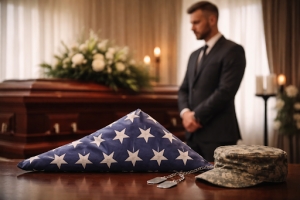
The transition from military life to civilian work often raises one central question: where can your experience still matter in a tangible way? A military-to-funeral service career path connects prior service experience with a profession centered on structure, responsibility, and care for others.
For many veterans, funeral service aligns with familiar principles while offering opportunities for sustained professional growth within their local communities.
| In This Article: You will discover how military discipline, leadership, and emotional resilience translate into funeral service roles, what education and licensure pathways support veterans, and why funeral service offers long-term stability and purpose after military service. |
From Military Service To Funeral Service
Funeral service is grounded in a strong sense of duty, respect for others, and responsibility to the families it serves.
Families rely on funeral professionals during moments of loss, expecting steady guidance and thoughtful care. That expectation aligns closely with military culture, where responsibility and professionalism shape daily work.
The shift from uniformed service to civilian employment can feel disorienting, with veterans often describing the loss of structure and identity as one of the hardest parts of transition. A career in funeral service offers an environment where procedures, accountability, and clear roles remain part of everyday operations, helping ease the adjustment during a veteran career transition.
For veterans seeking meaningful work, funeral service presents a natural continuation of service. Supporting families, honoring life, and protecting dignity reflect familiar missions that resonate long after military separation.
Shared Values Between Military Service & Funeral Service
Both of these career paths require a level of professionalism and a strong sense of discipline as their fundamental building blocks.
Funeral homes operate on precise schedules, detailed documentation, and strict regulatory standards. Veterans accustomed to inspections, protocols, and accountability often adapt quickly to these expectations.
Tradition holds comparable importance between them, with military ceremonies highlighting honor, ritual, and remembrance.
Funeral service careers rely on similar principles, using ceremony to help families process grief and maintain connection to their loved ones. That shared respect for tradition makes the trust between funeral professionals and the communities they serve stronger.
Service remains central since funeral professionals support families during deeply personal moments, placing the needs of others above their own. Veterans understand this mindset instinctively, making funeral service careers for veterans a strong cultural fit.
Military Skills That Apply To Funeral Service Careers
Many competencies developed through military service align closely with the everyday responsibilities found in funeral service roles:
- Leadership and accountability: Guiding families through arrangements requires calm direction and clear explanations.
- Team coordination: Funeral services depend on seamless collaboration with staff, clergy, cemeteries, and medical offices.
- Time management: Services often take shape within 24 to 72 hours, leaving little margin for error.
- Communication: Clear, respectful dialogue matters when emotions run high.
Crisis management experience holds particular value in this field. Many veterans often remain composed under times of stress and pressure, a trait families recognize immediately.
Reliability and adaptability further strengthen a veteran funeral director career, since schedules can shift quickly and responsibilities extend beyond standard business hours.
Emotional Resilience & Supporting Families Through Loss
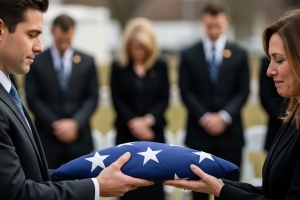
Military training emphasizes emotional control and resilience during stressful situations. Those qualities transfer well into funeral service, where professionals guide families through grief without adding confusion or strain.
- Emotional strength supports families during moments of shock, conflict, or uncertainty.
- Calm leadership helps keep arrangements organized while allowing space for mourning.
- Compassion paired with professionalism builds trust, especially when families feel overwhelmed.
- Logistics blend with emotional presence in funeral service.
Veterans often bring firsthand experience balancing empathy with operational focus, allowing them to support others while maintaining clarity and structure.
Education & Training Pathways For Veteran Students
Most states require formal education and licensure for funeral service professionals. An accredited associate degree in funeral service or mortuary science forms the academic foundation, followed by supervised training and licensure exams.
Veterans often find flexible learning options advantageous, with online and hybrid programs making it easier to balance coursework alongside work and family commitments. Many veterans use GI Bill benefits through a GI Bill funeral service program, making education more accessible.
American Academy McAllister Institute (AAMI) has extensive experience supporting military students throughout this process. AAMI works closely with veterans to explain program requirements, licensure pathways, and education benefits.
Funeral service education for veterans at AAMI focuses on academic rigor, regulatory preparation, and real-world readiness.
Long-Term Career Stability & Purpose After Service
Demand for funeral services continues to remain steady and strong regardless of broader economic conditions. Demand, combined with the dependable income, opportunity for growth, and being a fulfilling career path, many former service members transfer into the field seamlessly.
Demand
The United States registered over three million deaths in 2023 alone, illustrating the constant demand for trained professionals. Employment projections show continued openings each year, even as service models evolve.
Advancement
Career paths within funeral homes offer room for advancement. Many professionals begin as funeral directors or arrangers and move into management roles over time.
Income
Median wages reported by the Bureau of Labor Statistics reflect sustainable earning potential, especially for those who advance into leadership positions.
Purpose

Purpose remains a defining factor; honoring lives and supporting families provides daily meaning that many veterans find familiar. Mortuary science for veterans often becomes a way to serve locally while maintaining pride in their work.
Continue Your Service In Funeral Care
Veterans contribute structure, leadership, and steady decision-making to every position they step into. Funeral service offers a profession where those strengths remain valued and visible. A veteran funeral director career allows continued service rooted in dignity, compassion, and community trust.
At AAMI, we pledge to provide AAMI veteran students with accredited education, flexible learning options, and personalized guidance. Our team understands the transition process and works closely with military students as they build a future in funeral care.
See how your service background can support long-term career growth in funeral service at AAMI.edu.